The Wynter Wytch & The Goat at the Door
Opening Whysper
Winter sharpens more than the wind. Some nights, the dark leans in as though listening for something it has not heard in a long while.
That is when she walks, the Wynter Wytch. And close behind her, the Goat at the Door.
A tale of omen, truth, and the cold that refuses to lie.
The Tale as It Was Told
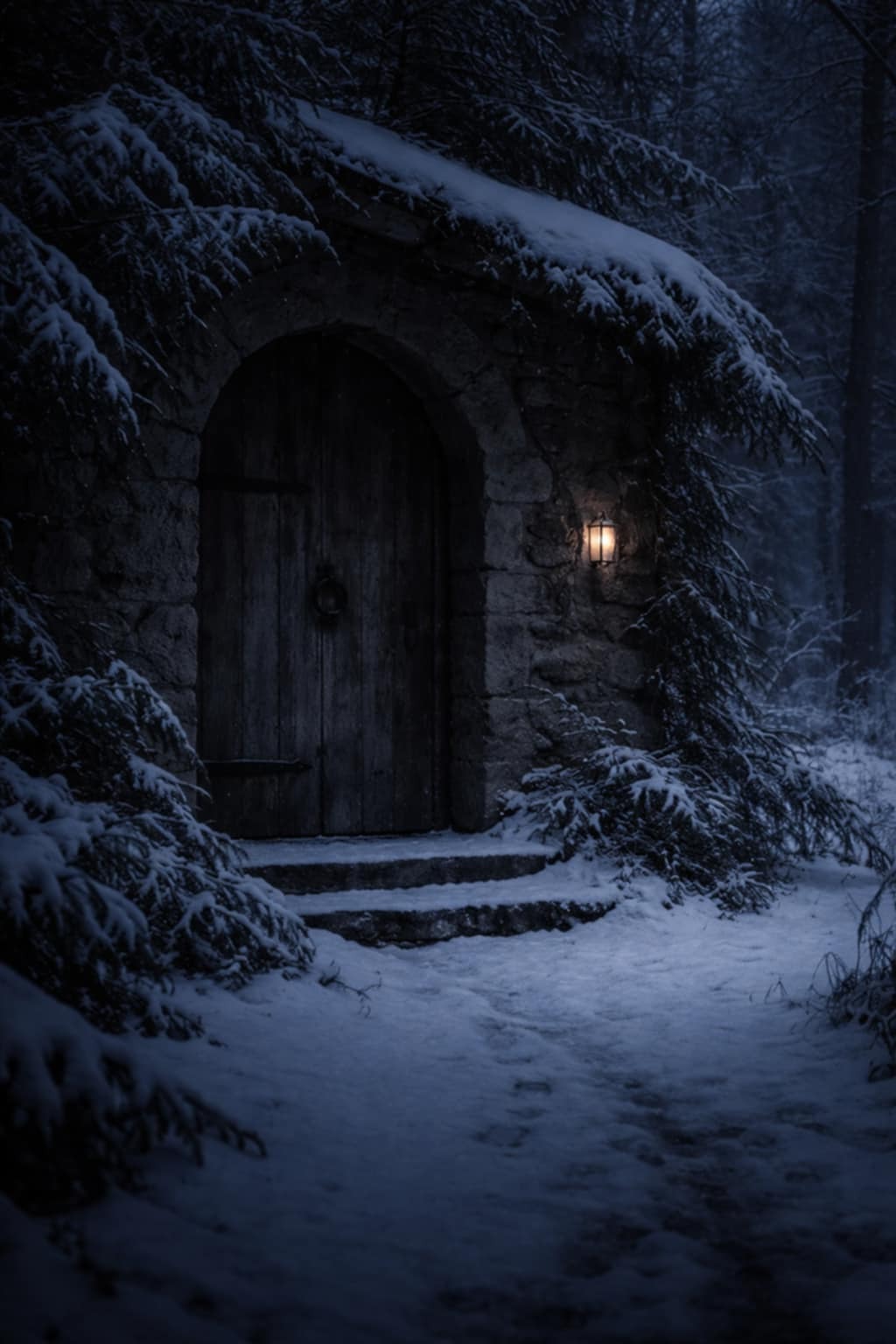
They spoke of the Wynter Wytch in low voices, as if naming her too brightly might invite the cold to listen. She lived on the last road before the forest claimed the land back, a narrow path where the wind learned it's edge and the snow settled deeper than anywhere else.
Her house was small, crooked, stubborn against the elements.
No ivy dared climb it.
No bird nested in its eaves.
But the smoke from her chimney always rose straight, as though even the wind respected her right to burn.
She was not feared, though many pretended she was. She was recognised. For she carried the whole season inside her body, its truth, its silence, its clarity, its bite. And on one night each year, when the moon rode low and the valley grew still enough to hear the trees listening back, the Wynter Wytch waited for a knock she had never once missed.
Three Knocks.
Never two.
Never four.
A rhythm ancient as frost. She opened her door only when she was ready, when the truth she'd been weighing in her palms finally settled.
Outside stood the Goat at The Door.
Tall as a man, broad as the winter itself, his horns were crusted in rime, and his breath curled like restless spirits set loose into the air. The bells strung across his chest clanged with a purpose older than fear, not warning, but summons. His eyes glowed the way embers do just before they die down to secrets.
"Wynter" he said.
And she inclined her head. She was one of the few who ever met him fully. Face to face. Shadow to shadow. Never running, never shrinking, never lying. For the Goat was no demon. No punisher of children. No festive bogeyman. He was the keeper of reckonings, the spirit who walked the valley on Krampusnacht to weigh what people pretended against what they truly lived.
The chains he carried were not for capture.
They were for drawing boundaries in the snow: lines between truth and falsehood, between what a person says, and who they really are when the dark half of the year watches.
But even an old winter daemon cannot see every shadow in every home.
So he came to her. Always to her.
"What truth do you hold this year?" he asked, as he did each Krampusnacht.
She answered only when she was certain: "Many have lied to themselves," she said once. And he nodded. "Yes. The air tasted wrong."
Another year: "Promises were made lightly. Too lightly."
His bells shook. "I will remind them of the weight."
But the year the valley still whispers about, she spoke a truth even he had not sensed:
"One knocks at my own door this Wynter."
And the Goat grew still.
"Shall I remove them?" he asked.
"No," she replied. "I will do it myself."
At that, he bowed. A gesture rare enough to chill the smoke in her chimney.
For truth spoken without fear is the sharpest magick, and the Wynter Wytch wielded it not with cruelty, but with precision.
When their council ended, he asked the final question of their yearly pact:
"Will you walk with me tonight?"
And she gave her unchanging answer:
"I walk alone. But wherever truth is needed, our paths will cross." This pleased him. He respected wytches who did not flinch from their own shadows.
So he turned and strode into the valley, bells clashing, chains dragging long, deliberate sigils into the snow.
Not symbols of punishment, symbols of realignment.
By dawn, villagers woke feeling lighter or heavier, depending on how tightly they'd been clinging to their own illusions. Some doors were dusted in frost patterns shaped like eyes. Some in spirals. Some in nothing at all.
The Wynter Wytch returned to her hearth, closed her door, and tended her own embers. For even she carried truths that no winter daemon had the right to audit.
And so the tale endures:
Where a Wynter Wytch stands, the Goat at the Door will always come. Not as a threat, nor omen, but as equal.
Because Winter knows its own.
~ Liadán Hallow